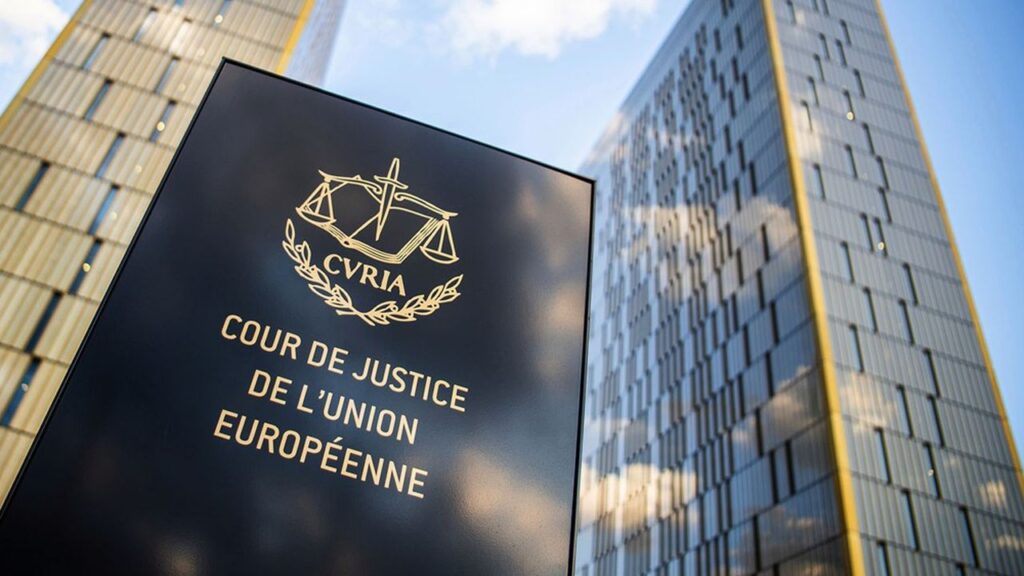
William Julié recently participated in a virtual press conference dedicated to the legal challenge brought before the General Court of the European Union against the restrictive measures adopted by the Council of the European Union against Mr. Jacques Baud.
Mr. Baud, a retired Colonel of the Swiss Army General Staff and former strategic intelligence analyst, was included on the EU sanctions list under the regime targeting Russia’s destabilising activities. The Council’s listing is based on his public analyses and commentaries relating, in particular, to the war in Ukraine.
The proceedings, currently pending before the General Court (Case T-169/26), have been brought jointly by WJ Avocats and LGP Law Firm in Vienna. The action seeks the annulment of the listing and raises a number of significant questions concerning the limits of the EU sanctions framework and the protection of fundamental rights.
The Legal Challenge
During the conference, William Julié presented the principal legal grounds relied upon in support of the action before the General Court.
These include, among other issues:
- the reliability, sufficiency and probative value of the evidence relied upon by the Council;
- compliance with the rights of the defence and the obligation to provide adequate reasons;
- the proportionality of the restrictive measures imposed; and
- the compatibility of the listing with the guarantees afforded under EU law and the Charter of Fundamental Rights.
The proceedings provide the General Court with an opportunity to examine the evidentiary standards applicable to individual sanctions and the degree of judicial scrutiny required where restrictive measures are adopted on the basis of public statements and published opinions.
A Broader Discussion on Fundamental Rights
The legal issues raised by the case were further explored by Professor Dietrich Murswiek, Professor Emeritus at the University of Freiburg, who provided an independent academic analysis of the applicable legal framework. His intervention focused in particular on the protection of freedom of expression under Article 11 of the Charter of Fundamental Rights of the European Union and Article 10 of the European Convention on Human Rights, as well as on the principle of proportionality.
Gabriel Lansky, Managing Partner of Lansky, Ganzger, Goeth + Partner, placed the proceedings in the broader context of the evolution of EU individual sanctions and their implications for the rule of law, discussing the safeguards that should accompany increasingly far-reaching restrictive measures.
Finally, Mr. Jacques Baud described the practical consequences of his listing. His testimony illustrated the concrete impact that EU sanctions can have on an individual’s daily life and professional activities, including exclusion from the banking system, the inability to receive income, including royalties, and restrictions on entry into and transit through the territory of the European Union.
A Case Beyond the Individual
Beyond the individual circumstances of Mr. Baud, the proceedings raise questions of wider significance for the EU sanctions regime.
The central issue is not whether one agrees with his analyses or opinions. Rather, the case invites the General Court to determine whether restrictive measures imposed in response to contested public speech satisfy the evidentiary, procedural and fundamental-rights requirements imposed by EU law.
As the EU continues to expand its use of targeted sanctions, the Court’s judgment may provide important guidance on the balance to be struck between the pursuit of the Union’s foreign policy objectives and the protection of the rule of law and fundamental freedoms.
Watch the press conference by using the password: v%tkT7.^