

News
News
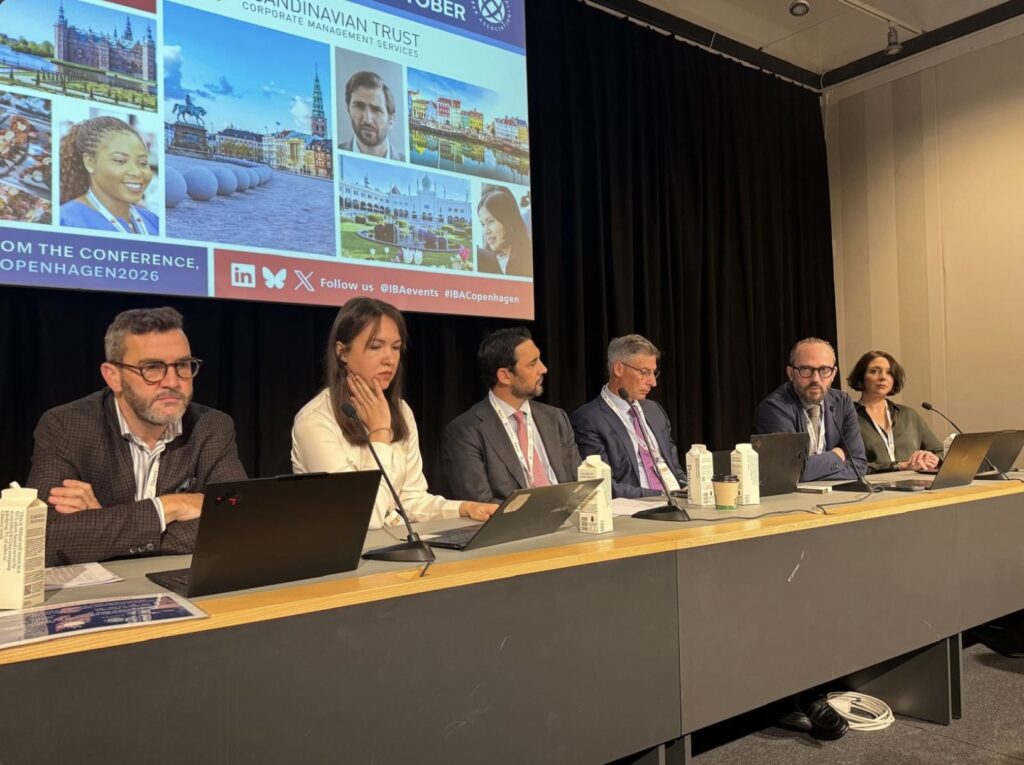
From 16 to 17 September, Amélie Beauchemin attended a conference on the EPPO and the Protection of the European Union’s financial interests, held at the Fondazione Lelio e Lisli Basso in Rome. She was invited as co-author, with William Julié, of the French chapter of the European Public Prosecutor’s Office
On 3 September, the Court of Justice of the European Union clarified the mechanism for freezing assets at national level. The practice has spread with the application of EU sanctions but remains poorly defined, at both EU and domestic levels. William Julié discussed the Court’s ruling with Andrew Rettman for
The Sanctions Committee of the French Anticorruption Agency (AFA) has, for the first time since its creation, imposed a financial penalty [1] on a company and its CEO for failing to fulfil their legal obligations to implement compliance programmes, without a preliminary injunction. As a reminder, the Sapin II Law
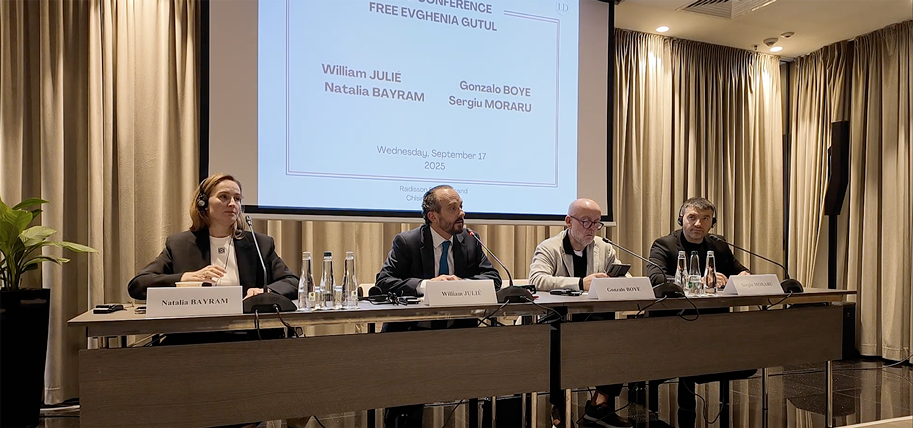
William Julié recently participated in a virtual press conference dedicated to the legal challenge brought before the General Court of the European Union against the restrictive measures adopted by the Council of the European Union against Mr. Jacques Baud. Mr. Baud, a retired Colonel of the Swiss Army General Staff
William Julié took part in a discussion among European lawyers on the comparisons between the French and English legal systems, during the ECBA’s annual conference in Barcelona, on the Full Comment podcast hosted by Danielle Reece-Greenhalgh and Edward Grange.
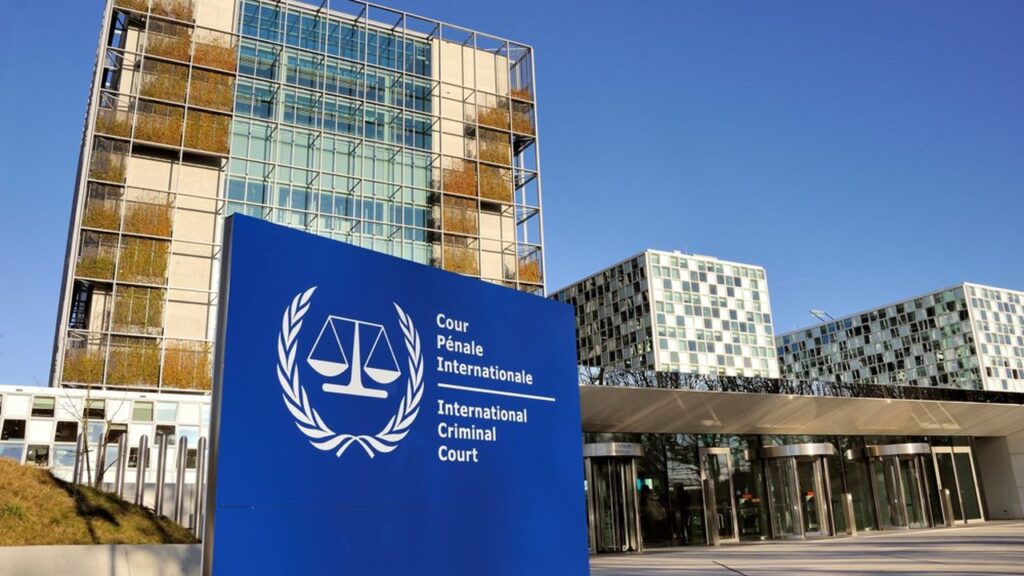
Speaking on RFI – Radio France Internationale, William Julié provided his legal analysis of the submission by the israeli NGO Shurat HaDin to the International Criminal Court, highlighting the complexity of the mechanisms for establishing international criminal liability as well as the particularly high evidentiary standards required by the ICC.
William Julié provided his legal analysis of the communication submitted by the NGO Shurat HaDin to the International Criminal Court, which illustrates the complexity of the mechanisms for triggering international criminal responsibility and the particularly high evidentiary requirements before the ICC. He noted that the NGO has indicated its view
As a guest on the “Contact” podcast hosted by Stéphan Bureau, alongside Jacques Baud, who the Firm is representing before the Court of Justice of the European Union (CJEU), William Julié discussed the issues surrounding freedom of expression in the context of European sanctions. Jacques Baud is subject to restrictive
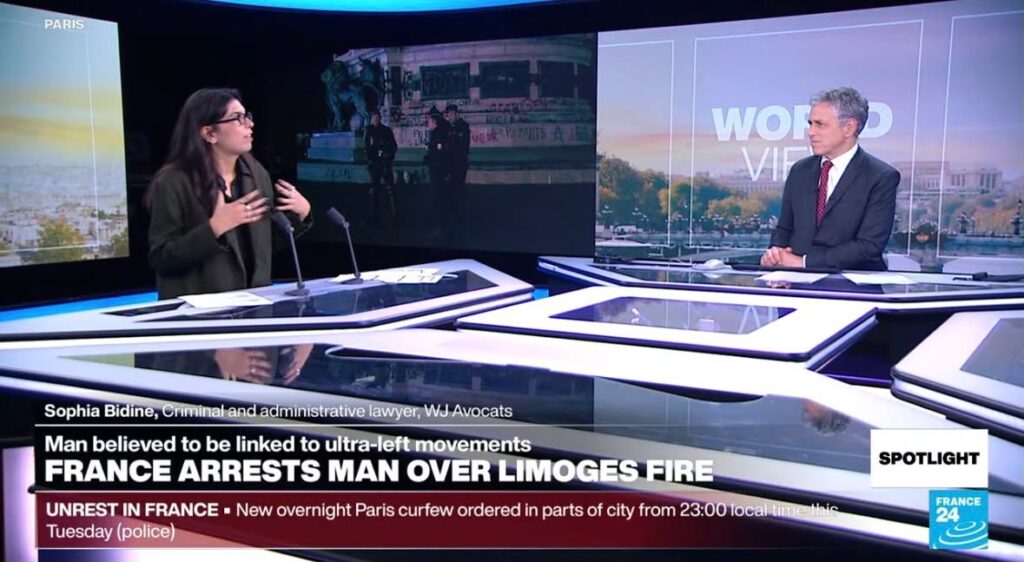
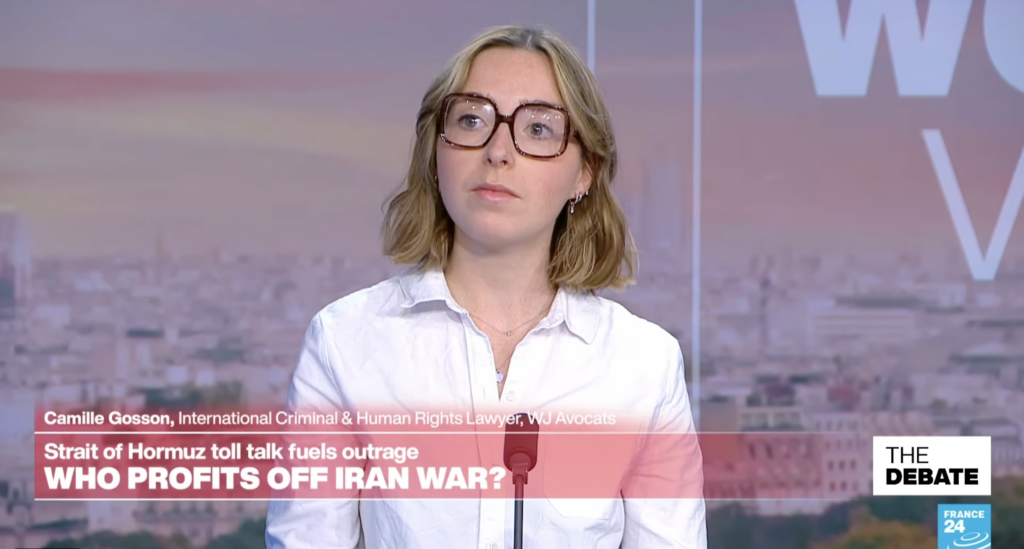
On The Debate on France 24, Camille Gosson examined questions surrounding the accountability of those who profit from armed conflicts, the ethical issues faced by companies, the means of identifying such practices, and the mechanisms likely to deter those who might be tempted to engage in them. She also stressed
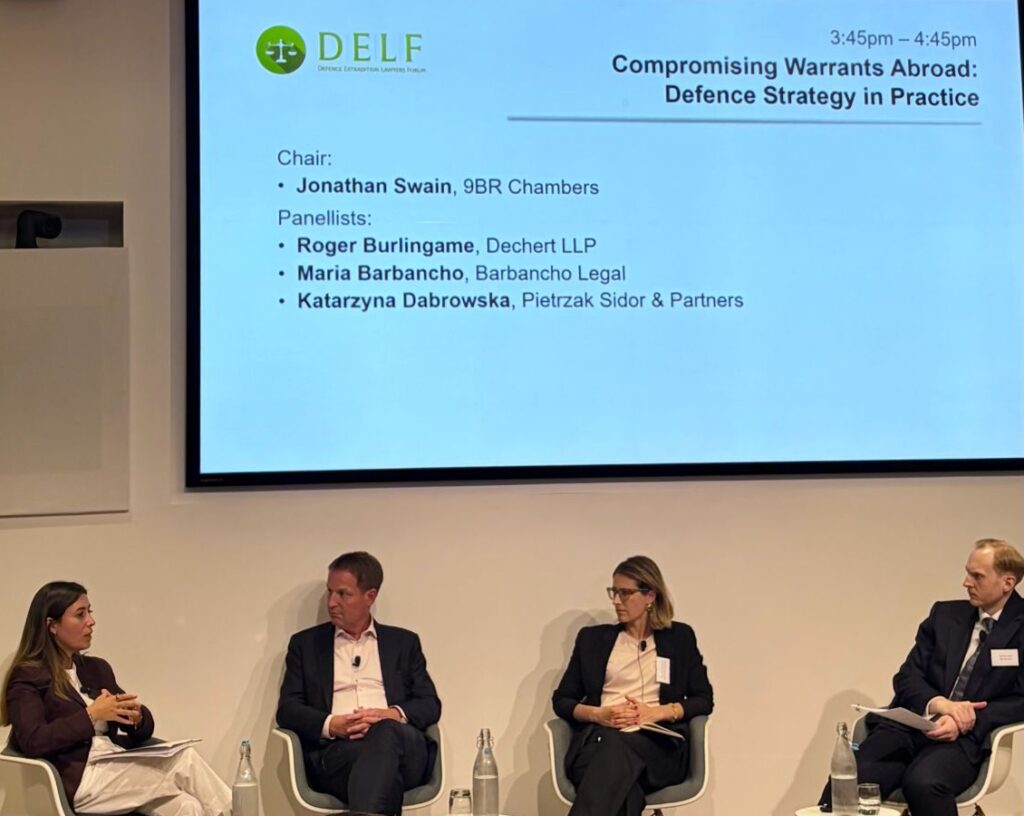
On 18 September 2026, Sophia Bidine attended the annual conference of the Defence Extradition Lawyers Forum (“DELF”), held in London. The discussions focused on the challenges facing extradition proceedings, and more specifically: the changes introduced by the Crime and Policing Act 2026 to UK extradition procedure; the use of international
On The Debate on France 24, Camille Gosson examined questions surrounding the accountability of those who profit from armed conflicts, the ethical issues faced by companies, the means of identifying such practices, and the mechanisms likely to deter those who might be tempted to engage in them. She also stressed
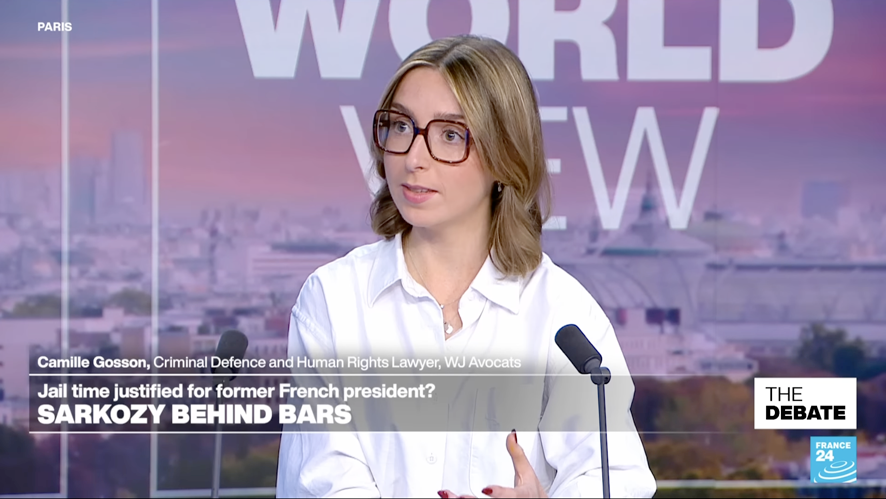
Camille Gosson participated to The Debate, on the day Nicolas Sarkozy started executing his sentence, as the Court of First Instance found him guilty of criminal conspiracy and convicted him to 5 years of imprisonment, with immediate effect, despite his appeal and the principle of suspensive effect under French law.
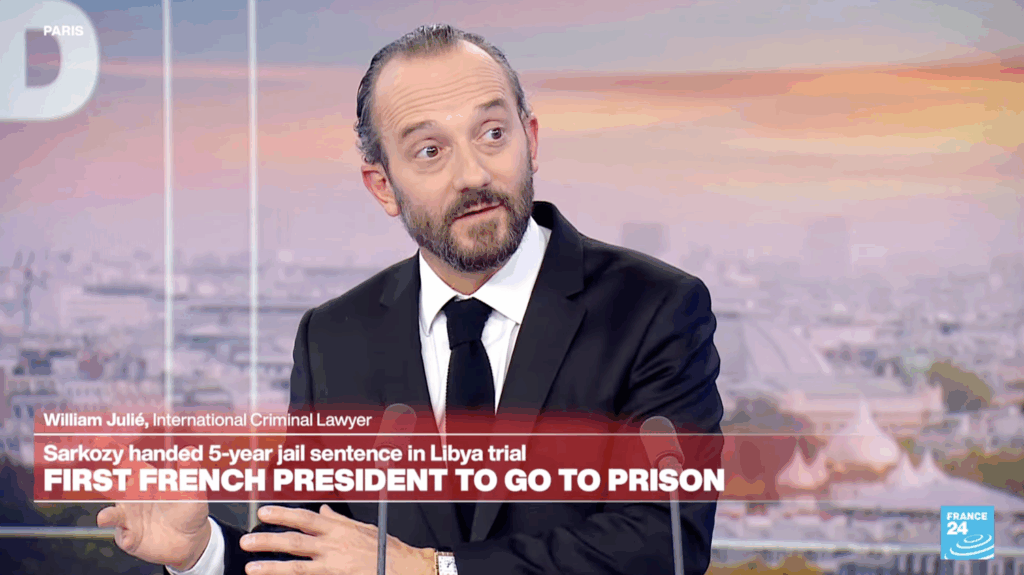
William Julié comments on the recent conviction of former French President Nicolas Sarkozy, who was sentenced to five years’ imprisonment for criminal association in connection with the “Libyan case.” He provides insight into the nature of this offence as well as the mechanism of provisional enforcement of the sentence.
William JULIÉ discussed, in tandem with his colleague Antoine GAUTIER-SAUVAGNAC, the situation of their client, Mr AKHMEDOV. He also pointed out the implementation of a strategy to circumvent the power of judges by the Council of the European Union, which has further extended the possibilities of sanctions, in particular to
William JULIÉ made clarifications on the report addressed to the Paris public prosecutor’s office by two deputies regarding the influencer Dylan Thiry under Article 40 of the French Code of Criminal Procedure, and went over the rules of French territorial jurisdiction in criminal matters.
William JULIÉ commented on the tense situation between Mayotte and the Comoros following the expulsions carried out by the French Ministry of the Interior. He explained how the emerging territorial dispute between the two states could come under the jurisdiction of the International Court of Justice.
William JULIÉ questioned the compatibility of the decisions of the French Court of Cassation in the Italian “brigadist” cases with articles 2, 6 and 13 of the European Convention on Human Rights and made a number of comments in support of the interests of the Italian State.
William JULIÉ reacted to the international arrest warrant issued by the Pre-Trial Chamber of the International Criminal Court against Vladimir Putin. He spoke of the risks faced by the Russian President and highlighted the difficulties of enforcing this type of arrest warrant.
William JULIÉ challenged the arguments put forward by the Council of the European Union to justify placing and keeping his client, Mr AKHMEDOV, on the sanctions list. He also pointed out the material errors and irregularities that have marred the Council’s decisions since the first sanctions were imposed.
The Court of Cassation will rule on the extradition of ten people convicted in Italy during the “Years of Lead”. William JULIÉ made new observations on behalf of the Italian State in the so-called “Brigadist” cases.
William JULIÉ intervened after the attack on rue d’Enghien, in the 10th arrondissement of Paris. He explained that the qualification of a terrorist attack could be retained if its constitutive elements were established.
The Guideline on the Strategic use of UN Human Rights Mechanisms for Syria identifies the mechanisms to be invoked to provide Syrian lawyers and activists with the tools and keys to understanding.
Warning: Trying to access array offset on false in /home/clients/11730fdd62870e8a421f09fe0bdcb468/sites/wjavocats.com/wp-content/plugins/elementor-pro/modules/dynamic-tags/tags/post-featured-image.php on line 39

William Julie, Sophie Menegon, and Juliette Fauvarque Volume 12, Issue 3 of New Journal of European Criminal Law https://doi.org/10.1177/20322844211026378 This article purports to analyze the role conferred to the requesting State in domestic extradition procedures. Despite the existence of a judicial control over extradition, the majority of States included in
Warning: Trying to access array offset on false in /home/clients/11730fdd62870e8a421f09fe0bdcb468/sites/wjavocats.com/wp-content/plugins/elementor-pro/modules/dynamic-tags/tags/post-featured-image.php on line 39
What is the essence of the rule against the extradition of nationals? In which cases and across which States does it apply?
Warning: Trying to access array offset on false in /home/clients/11730fdd62870e8a421f09fe0bdcb468/sites/wjavocats.com/wp-content/plugins/elementor-pro/modules/dynamic-tags/tags/post-featured-image.php on line 39
The entry into force of the Agreement on cooperation between the United Kingdom and the European Union (hereinafter “EU”) has led to a decrease of certain rights for wanted individuals, but should not in principle, have consequences regarding the protection of fundamental rights.
Warning: Trying to access array offset on false in /home/clients/11730fdd62870e8a421f09fe0bdcb468/sites/wjavocats.com/wp-content/plugins/elementor-pro/modules/dynamic-tags/tags/post-featured-image.php on line 39
On 31 January 2020, the United Kingdom officially left the European Union (« EU »). The transition period provided for by the Agreement on the withdrawal of the United Kingdom from the EU («the Withdrawal Agreement »), during which the Union’s law was still applicable, in particular regarding criminal cooperation,
Warning: Trying to access array offset on false in /home/clients/11730fdd62870e8a421f09fe0bdcb468/sites/wjavocats.com/wp-content/plugins/elementor-pro/modules/dynamic-tags/tags/post-featured-image.php on line 39
This article intends to identify the legal actions which have or could be led against China in order to render this State accountable for the damages caused by the COVID-19. Several proceedings have already been initiated by individuals or NGOs against the Chinese authorities at the domestic or international level.
Speaking on RFI – Radio France Internationale, William Julié provided his legal analysis of the submission by the israeli NGO Shurat HaDin to the International Criminal Court, highlighting the complexity of the mechanisms for establishing international criminal liability as well as the particularly high evidentiary standards required by the ICC.