News
News
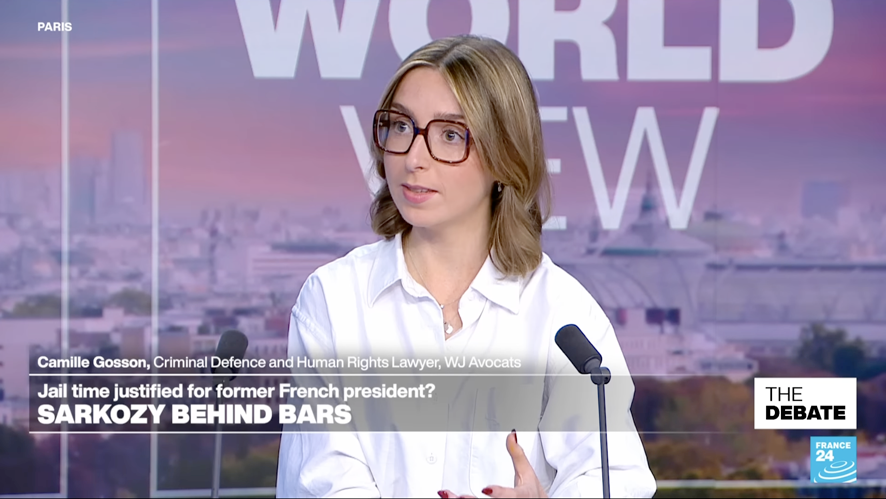
Camille Gosson participated to The Debate, on the day Nicolas Sarkozy started executing his sentence, as the Court of First Instance found him guilty of criminal conspiracy and convicted him to 5 years of imprisonment, with immediate effect, despite his appeal and the principle of suspensive effect under French law.
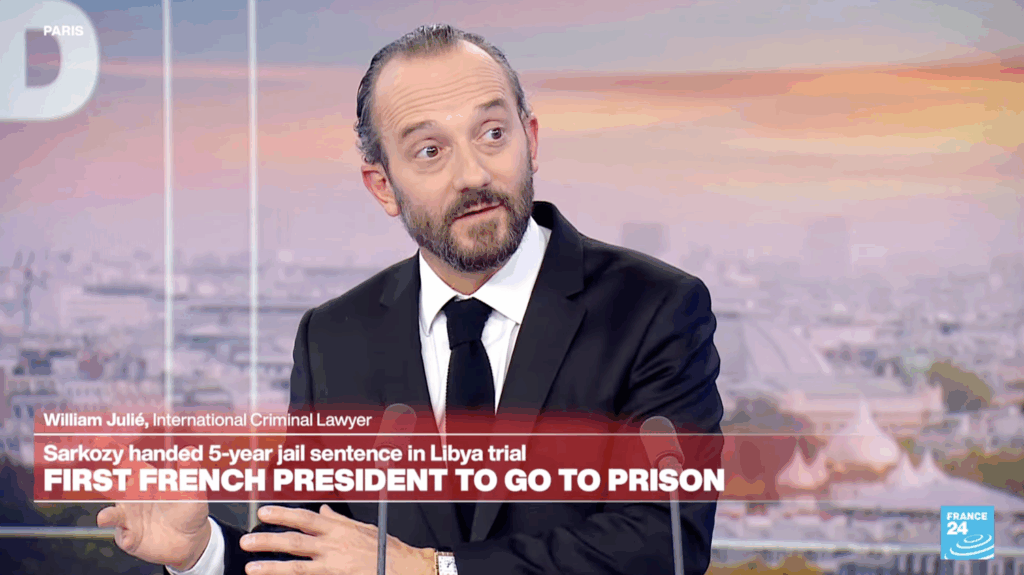
William Julié comments on the recent conviction of former French President Nicolas Sarkozy, who was sentenced to five years’ imprisonment for criminal association in connection with the “Libyan case.” He provides insight into the nature of this offence as well as the mechanism of provisional enforcement of the sentence.
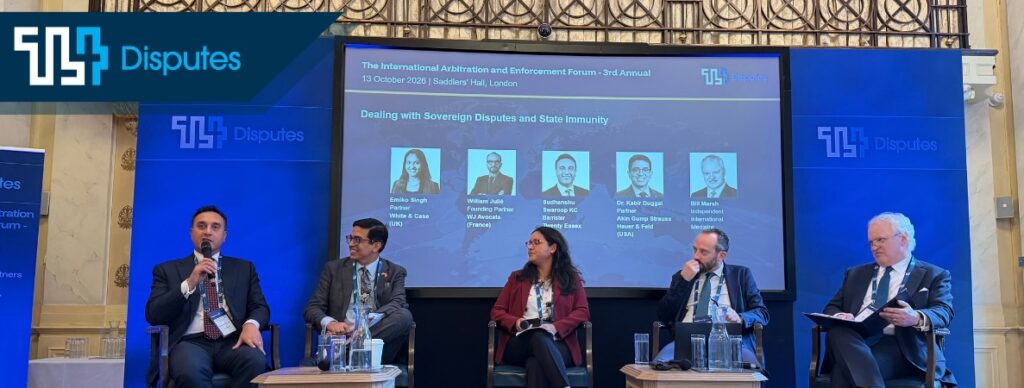
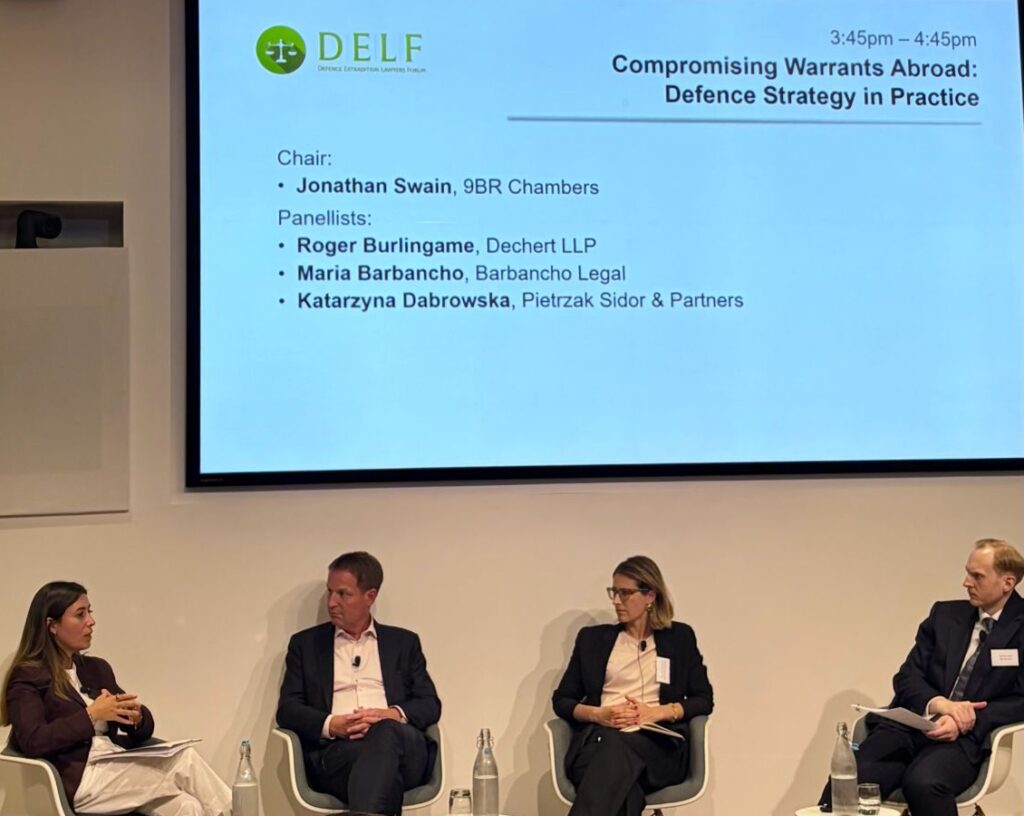
On 18 September 2026, Sophia Bidine attended the annual conference of the Defence Extradition Lawyers Forum (“DELF”), held in London. The discussions focused on the challenges facing extradition proceedings, and more specifically: the changes introduced by the Crime and Policing Act 2026 to UK extradition procedure; the use of international
William Julié appeared before the Court of Justice of the European Union in the proceedings for annulment of the decision of the Council of the European Union’s decision to include the Mr Arkady VOLOZH’s name on the list of sanctions imposed following the invasion of Ukraine. He emphasized his client’s
William JULIÉ reacted to Jean-Luc MÉLENCHON’s comments and provides a legal analysis. He points out that terrorism, despite a UN convention specifically devoted to defining and punishing terrorism, is well and truly defined in European Union Law as well as in numerous sectoral international conventions. He also refers to the
Regarding the atrocities perpetrated by Hamas in Israel, William JULIÉ indicates the probability of their classification as crimes against humanity. He claims that the acts perpetrated in the past by this organisation can be used to aulify the systematicity of these attacks.
Article on the succession dispute involving a Russian oligarch, whose interests are represented by WJ Avocats.
WJ Avocats participated in the 2024 edition of the ICLG Sanctions Laws and Regulations Report. The firm drafted the part on the French sanctions regime. It gives an overview of all restrictive measures created and applied by the French authorities: UN, EU and national sanctions. This year’s edition stresses the
Mr William Julié answers the question of whether it is possible to judge individuals responsible for the war in Ukraine. In this case, Ukraine is putting forward a strong rule of law which allows the executors to be judged in a proper manner, which calls for international criminal justice to
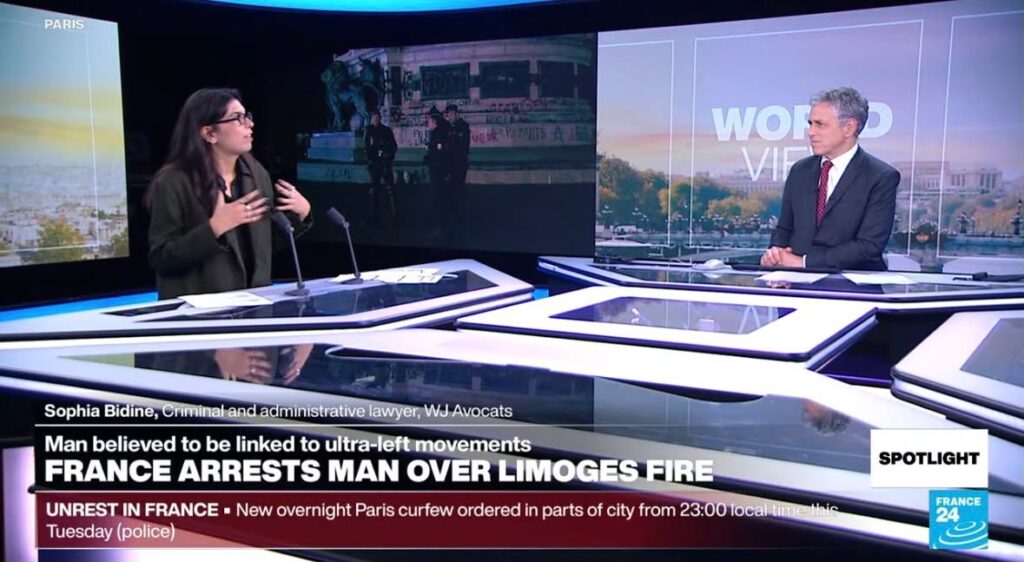
Following the remand in custody of a Marseilles police officer suspected of violence during the riots, Maître William JULIÉ provided clarification on criminal procedure, in particular with regard to the conditions surrounding pre-trial custody pending trial.
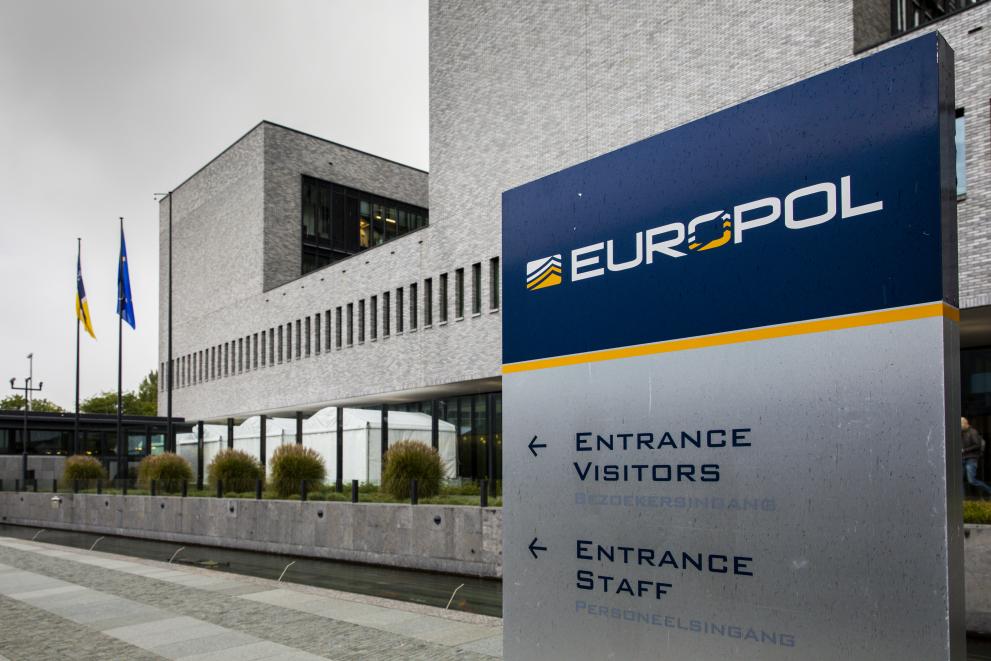
On 24 June 2026, the European Commission presented a proposal for a Regulation on the European Union Agency for Law Enforcement Cooperation (Europol)[1]. The text would repeal Regulation (EU) 2016/794 of 11 May 2016 (the “Europol Regulation”), which currently governs the Agency, and replace it with a new legal framework[2].
William Julié, Amélie Beauchemin and Elena Moreno co-authored the France chapter of the ICLG Sanctions Laws and Regulations 2027 (Eighth Edition), published by Global Legal Group. The chapter is a Q&A mapping the French sanctions framework as it stands in 2026: the four autonomous national regimes (terrorism, foreign interference, drug
In an article recently published in the International Comparative Legal Guides (ICLG)’s Sanctions Laws and Regulations 2027 guide, entitled “Where sanctions meet criminal law: blurring of legal boundaries”, William Julié, Elena Moreno and Amélie Beauchemin examine the European Commission and the High Representative’s proposal of 9 July 2026 for a
The Sanctions Committee of the French Anticorruption Agency (AFA) has, for the first time since its creation, imposed a financial penalty [1] on a company and its CEO for failing to fulfil their legal obligations to implement compliance programmes, without a preliminary injunction. As a reminder, the Sapin II Law
The European Criminal Bar Association has published a report entitled “Safeguarding INTERPOL’s Systems: Recommendations for Reform”, which William Julié and Camille Gosson co-authored with fellow INTERPOL practitioners Vânia Costa Ramos, Rebecca Niblock, Alex Tinsley, Jago Russell, and Sören Schomburg. This report was prepared with the active engagement of the Commission
Review of the 2024 CCF Activity Report, accessible here: https://www.interpol.int/Who-we-are/Commission-for-the-Control-of-INTERPOL-s-Files-CCF/About-the-CCF
Speaking on RFI – Radio France Internationale, William Julié provided his legal analysis of the submission by the israeli NGO Shurat HaDin to the International Criminal Court, highlighting the complexity of the mechanisms for establishing international criminal liability as well as the particularly high evidentiary standards required by the ICC.