News

News

William Julié comments on INTERPOL's CCF decision to remove the Red Notice issued against his client, Paul Watson
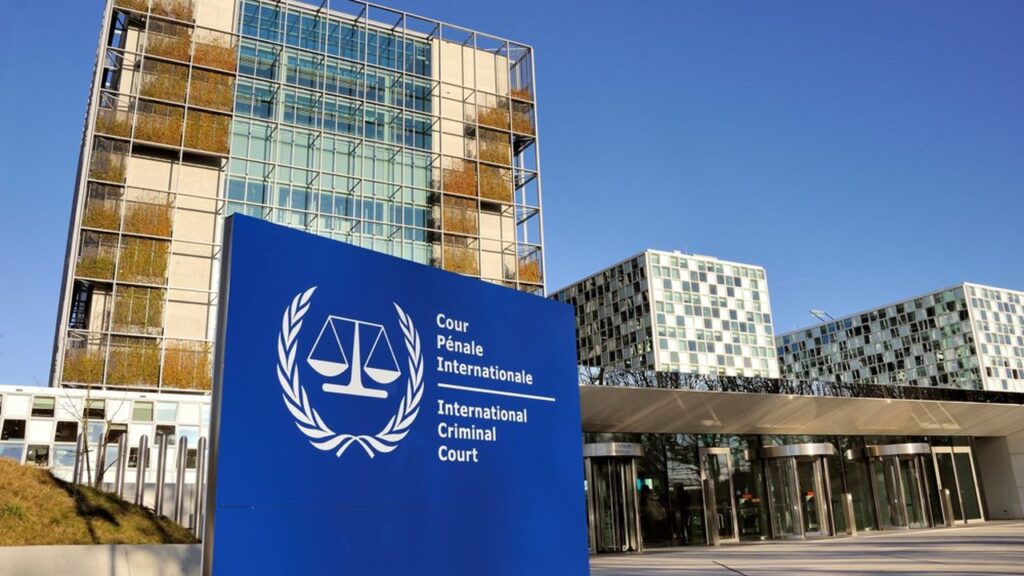
William Julié provides legal clarification on the jurisdiction of the ICC following the arrest of Rodrigo Duterte.
Camille Gosson comments on the possible legalization of euthanasia and assisted suicide by the French Parliament and the european legal framework on the right to die in dignity
Maître Julié comments on the suspension of the Red Notice against Paul Watson and recalls that the legal battle is still ongoing.
Maître William Julié comments on the decsision by INTERPOL’s CCF to suspend the Red Notice issued against his client, activist Paul Watson.
Maître Julié comments on and analyses the conviction of Marine Le Pen for misappropriation of public funds, with a five-year ineligibility sentence.
Maître Julié comments on Algeria's refusal to repatriate its nationals, in the context of the knife attack in Mulhouse.
Maître Julié provides some legal explanations on the European arrest warrant in the context of Mohamed Amra's arrest.
Maître Beauchemin emphasises the restrictive nature of the offence of participation in a mercenary activity under French criminal law and the resulting difficulty of prosecuting French dual nationals working for private military companies in the Democratic Republic of the Congo on these grounds.

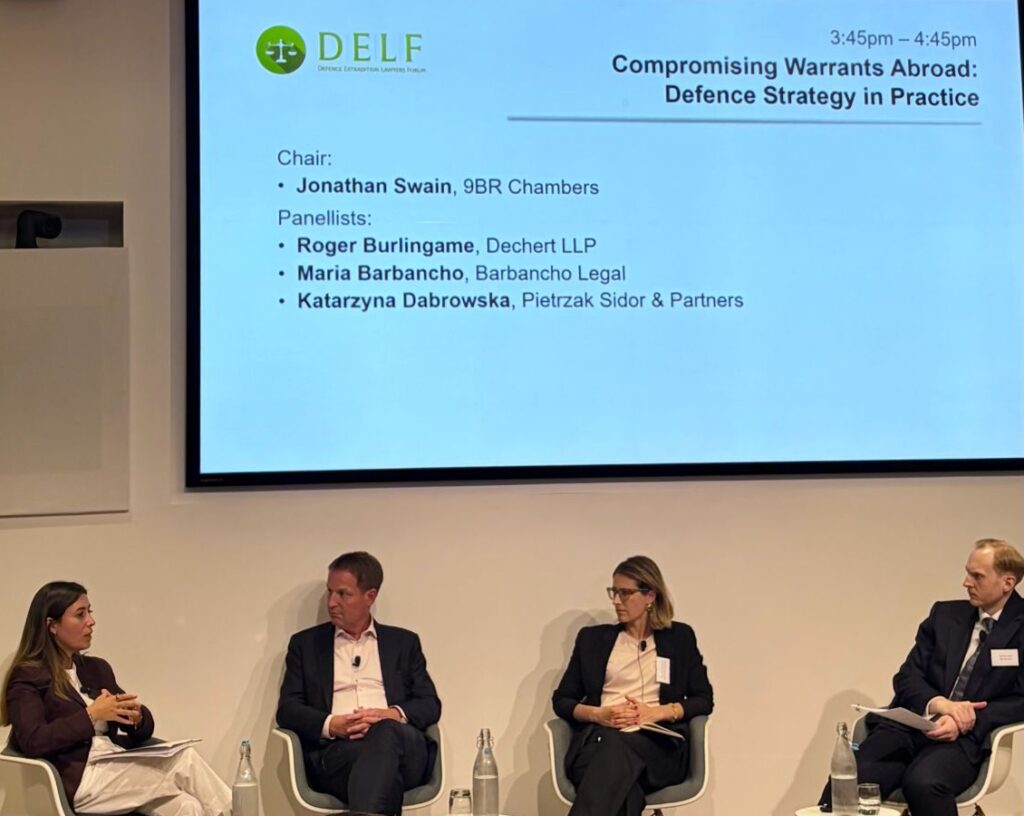
On 18 September 2026, Sophia Bidine attended the annual conference of the Defence Extradition Lawyers Forum (“DELF”), held in London. The discussions focused on the challenges facing extradition proceedings, and more specifically: the changes introduced by the Crime and Policing Act 2026 to UK extradition procedure; the use of international

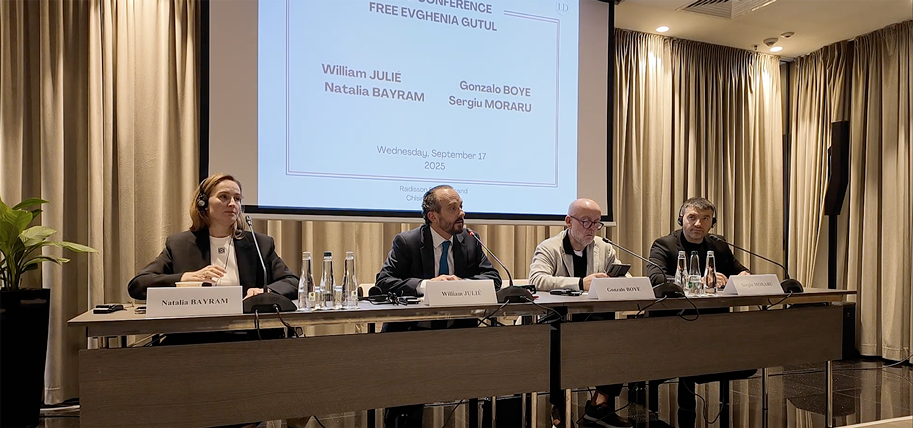
William Julié and Gonzalo Boye comment on the situation of one of their clients, Ms. Evghenia Gutul, Governor of Gagauzia in Moldova, who was sentenced to seven years' imprisonment following proceedings marked by serious violations of her fundamental rights

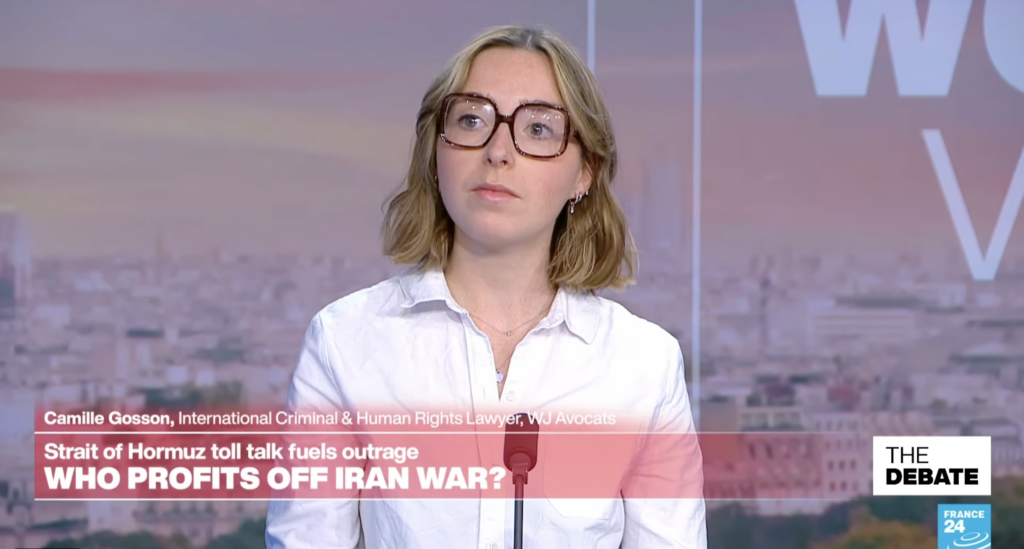
On The Debate on France 24, Camille Gosson examined questions surrounding the accountability of those who profit from armed conflicts, the ethical issues faced by companies, the means of identifying such practices, and the mechanisms likely to deter those who might be tempted to engage in them. She also stressed

William Julié highlights the violations of Evghenia Gutul’s procedural rights during her trial in Moldova.
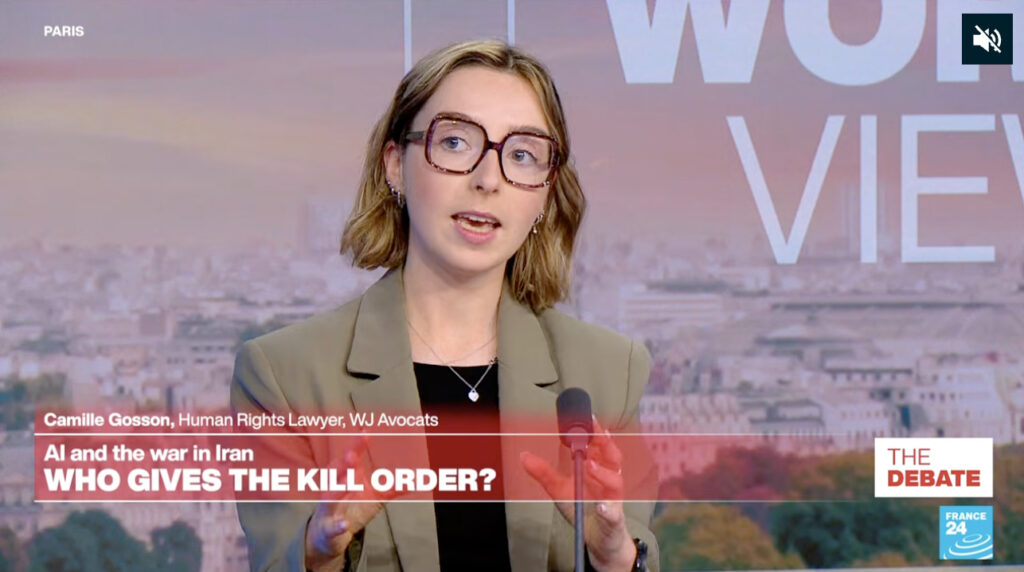
Camille Gosson addressed the legal implications of a strike on a school in Iran that may have relied on outdated intelligence generated by an artificial intelligence system used by the U.S. military.
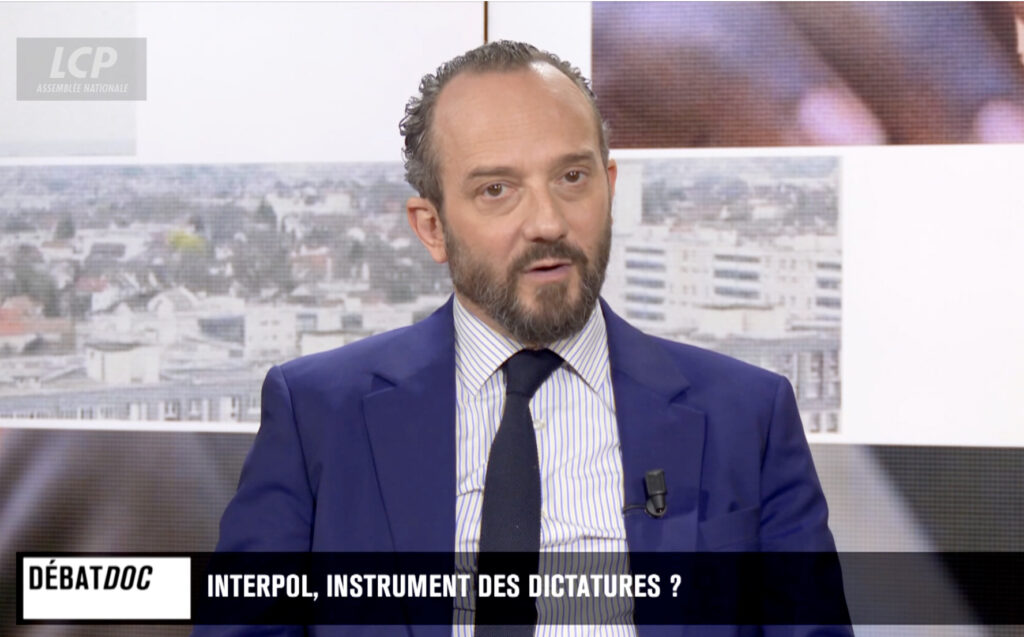
William Julié discussed the misuse of INTERPOL red notices for political purpose.
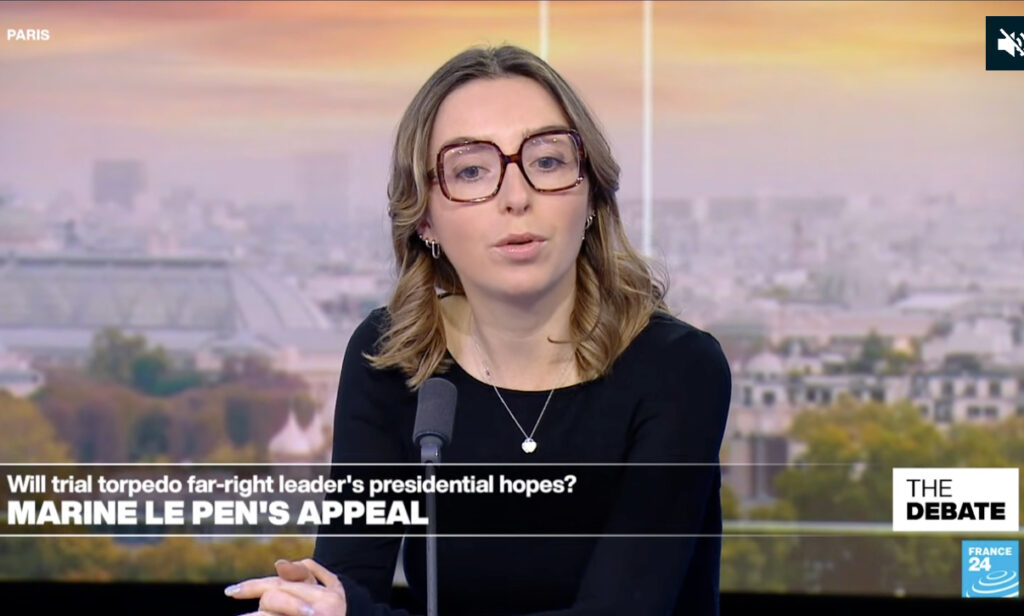
Camille Gosson analyzed the main legal issues in Marine Le Pen's appeal trial
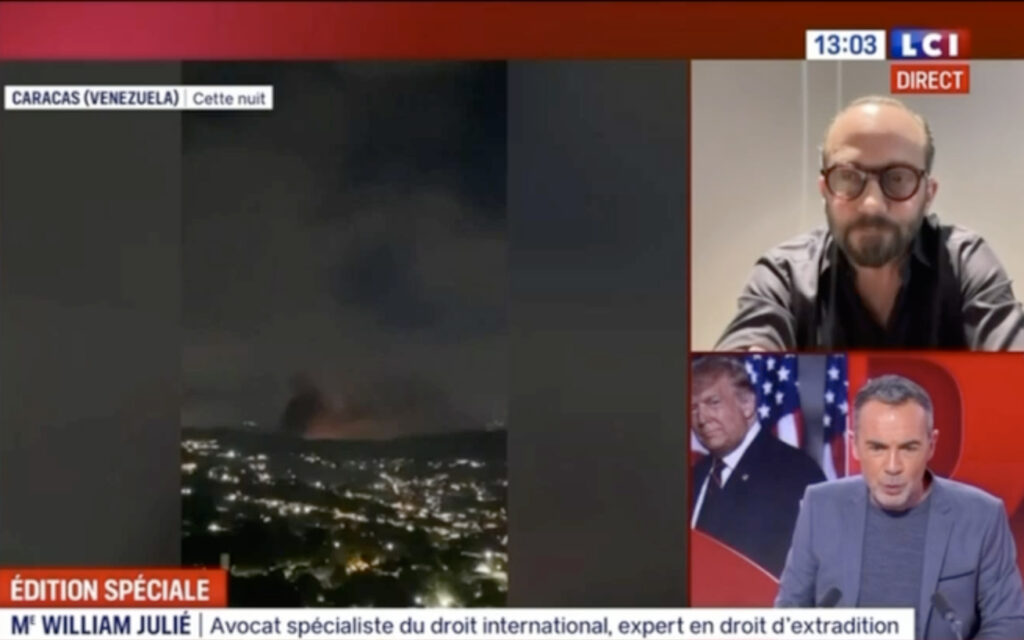
William Julié commented on the capture of Nicolas Maduro, President of Venezuela, by the United States of America

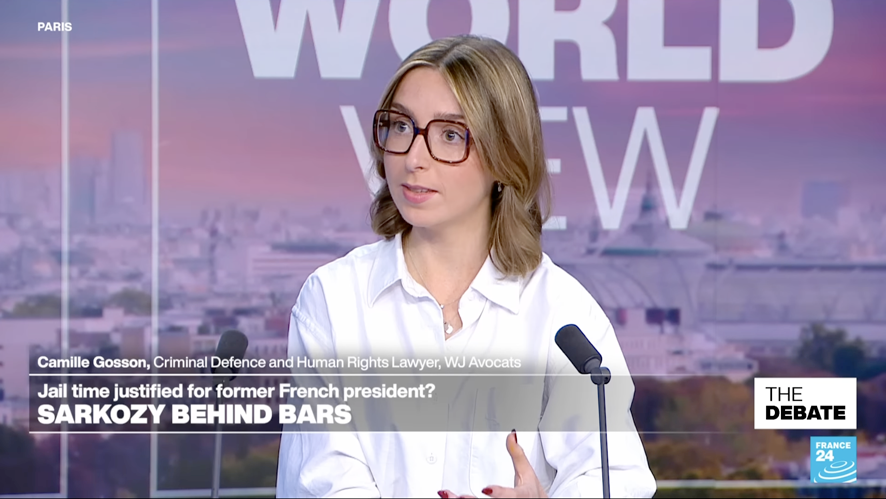
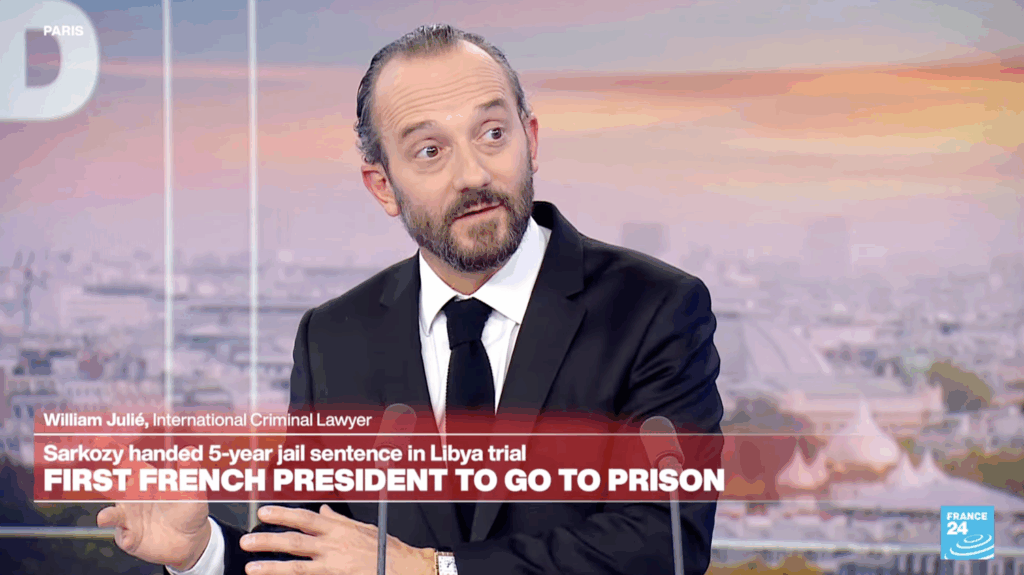
Camille Gosson participated to The Debate, on the day Nicolas Sarkozy started executing his sentence, as the Court of First Instance found him guilty of criminal conspiracy and convicted him to 5 years of imprisonment, with immediate effect, despite his appeal and the principle of suspensive effect under French law.

William Julié comments on the recent conviction of former French President Nicolas Sarkozy, who was sentenced to five years’ imprisonment for criminal association in connection with the “Libyan case.” He provides insight into the nature of this offence as well as the mechanism of provisional enforcement of the sentence.

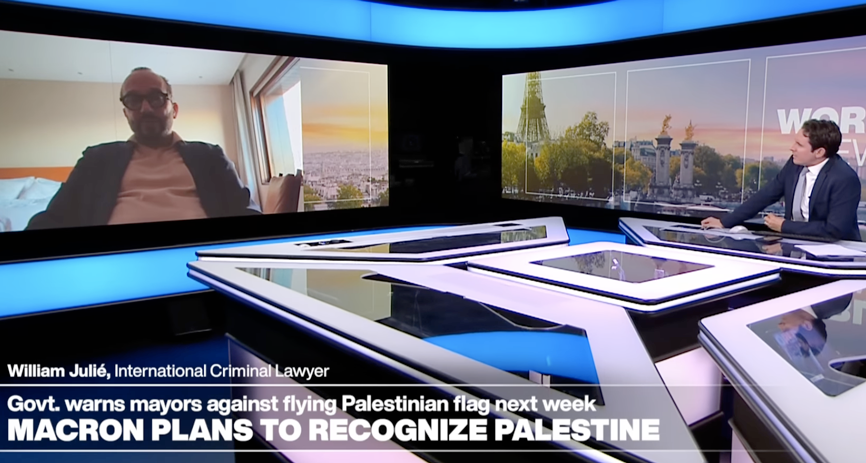
William Julié comments on the instructions issued by the Minister of the Interior prohibiting mayors from displaying Palestinian flags on the steps of town halls on the day France recognised the State of Palestine.

William JULIÉ discussed, in tandem with his colleague Antoine GAUTIER-SAUVAGNAC, the situation of their client, Mr AKHMEDOV. He also pointed out the implementation of a strategy to circumvent the power of judges by the Council of the European Union, which has further extended the possibilities of sanctions, in particular to

William JULIÉ made clarifications on the report addressed to the Paris public prosecutor’s office by two deputies regarding the influencer Dylan Thiry under Article 40 of the French Code of Criminal Procedure, and went over the rules of French territorial jurisdiction in criminal matters.

William JULIÉ commented on the tense situation between Mayotte and the Comoros following the expulsions carried out by the French Ministry of the Interior. He explained how the emerging territorial dispute between the two states could come under the jurisdiction of the International Court of Justice.

William JULIÉ questioned the compatibility of the decisions of the French Court of Cassation in the Italian “brigadist” cases with articles 2, 6 and 13 of the European Convention on Human Rights and made a number of comments in support of the interests of the Italian State.

William JULIÉ reacted to the international arrest warrant issued by the Pre-Trial Chamber of the International Criminal Court against Vladimir Putin. He spoke of the risks faced by the Russian President and highlighted the difficulties of enforcing this type of arrest warrant.

William JULIÉ challenged the arguments put forward by the Council of the European Union to justify placing and keeping his client, Mr AKHMEDOV, on the sanctions list. He also pointed out the material errors and irregularities that have marred the Council’s decisions since the first sanctions were imposed.

The Court of Cassation will rule on the extradition of ten people convicted in Italy during the “Years of Lead”. William JULIÉ made new observations on behalf of the Italian State in the so-called “Brigadist” cases.

William JULIÉ intervened after the attack on rue d’Enghien, in the 10th arrondissement of Paris. He explained that the qualification of a terrorist attack could be retained if its constitutive elements were established.

William JULIÉ intervened after the attack on rue d’Enghien, in the 10th arrondissement of Paris. He explained that the qualification of a terrorist attack could be retained if its constitutive elements were established.

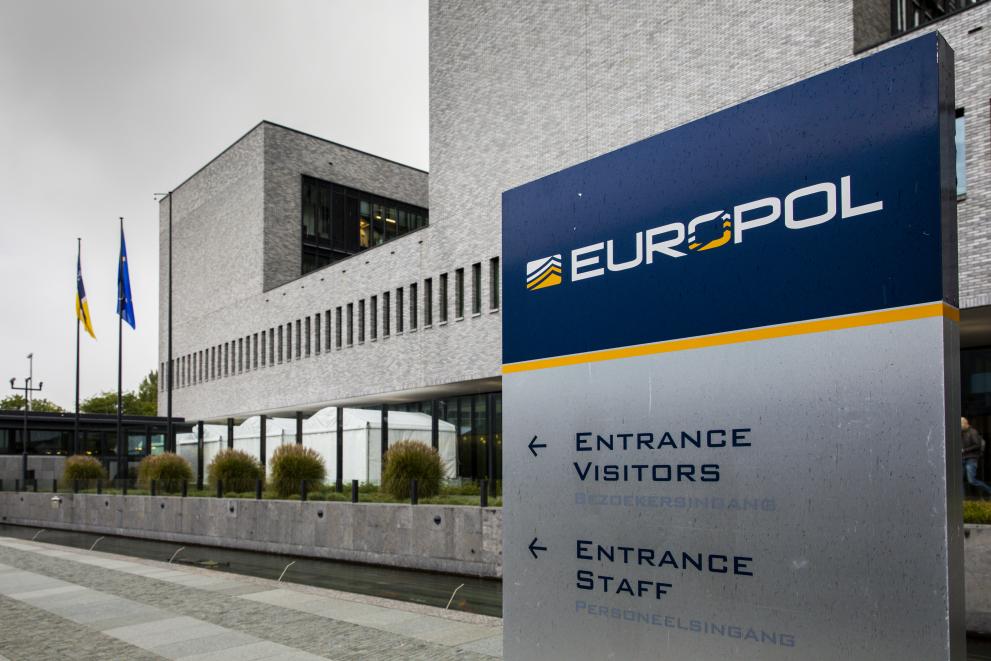
On 24 June 2026, the European Commission presented a proposal for a Regulation on the European Union Agency for Law Enforcement Cooperation (Europol)[1]. The text would repeal Regulation (EU) 2016/794 of 11 May 2016 (the “Europol Regulation”), which currently governs the Agency, and replace it with a new legal framework[2].

William Julié, Amélie Beauchemin and Elena Moreno co-authored the France chapter of the ICLG Sanctions Laws and Regulations 2027 (Eighth Edition), published by Global Legal Group. The chapter is a Q&A mapping the French sanctions framework as it stands in 2026: the four autonomous national regimes (terrorism, foreign interference, drug

In an article recently published in the International Comparative Legal Guides (ICLG)’s Sanctions Laws and Regulations 2027 guide, entitled “Where sanctions meet criminal law: blurring of legal boundaries”, William Julié, Elena Moreno and Amélie Beauchemin examine the European Commission and the High Representative’s proposal of 9 July 2026 for a

The Sanctions Committee of the French Anticorruption Agency (AFA) has, for the first time since its creation, imposed a financial penalty [1] on a company and its CEO for failing to fulfil their legal obligations to implement compliance programmes, without a preliminary injunction. As a reminder, the Sapin II Law

The European Criminal Bar Association has published a report entitled “Safeguarding INTERPOL’s Systems: Recommendations for Reform”, which William Julié and Camille Gosson co-authored with fellow INTERPOL practitioners Vânia Costa Ramos, Rebecca Niblock, Alex Tinsley, Jago Russell, and Sören Schomburg. This report was prepared with the active engagement of the Commission

Review of the 2024 CCF Activity Report, accessible here: https://www.interpol.int/Who-we-are/Commission-for-the-Control-of-INTERPOL-s-Files-CCF/About-the-CCF

The Firm contributes to the 2025 edition of the ICLG Sanctions Guide.
The Firm contributes to the Global Practice Guide on Sanctions published by Chambers and partners.
The Firm writes an article on the case of Mazepin v. Council before the Court of Justice of the European Union.

Speaking on RFI – Radio France Internationale, William Julié provided his legal analysis of the submission by the israeli NGO Shurat HaDin to the International Criminal Court, highlighting the complexity of the mechanisms for establishing international criminal liability as well as the particularly high evidentiary standards required by the ICC.

Maître Julié clarifies the question of Benjamin Netanyahu's immunity before the International Criminal Court